

Blog
Vietnam Longan Export: Harvest Season and Export Requirements

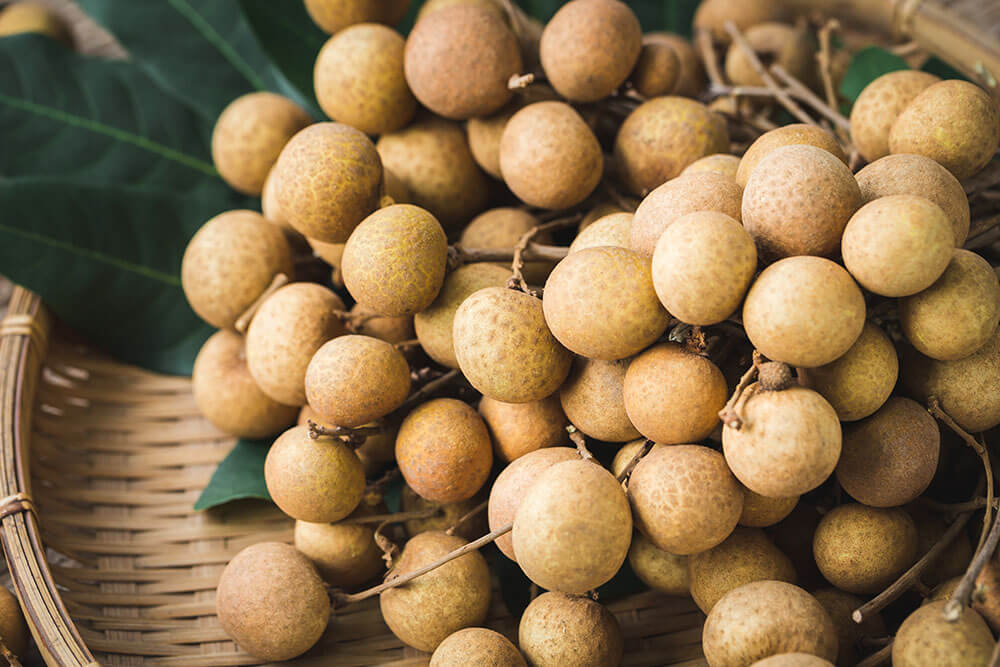
Vietnam is an established producer of longan (Dimocarpus longan), supplying both domestic and international markets. Vietnamese longan is available in several commercial varieties and can be exported as fresh, frozen, dried, canned or processed longan products.
For international buyers, Vietnam offers an attractive sourcing option because longan production is distributed across both northern and southern regions, creating different harvest windows during the year. Vietnam already exports longan to markets including China, Singapore, Malaysia and the United States.
This guide covers Vietnam’s longan varieties, harvest season, growing regions, quality standards, packaging, shelf life and key export requirements.
1. Why Source Longan from Vietnam?
Vietnam has several advantages for international longan buyers.
Multiple Growing Regions
Longan is cultivated in both northern and southern Vietnam.
Important production areas include:
- Mekong Delta
- Hung Yen
- Son La
- Hai Duong
- Dong Thap
- Tien Giang
- Vinh Long
- Ben Tre
Hung Yen, Son La and Hai Duong have developed concentrated production areas and export-oriented cultivation. (Vietnam+ (VietnamPlus))
Extended Production Window
One advantage of Vietnam’s longan industry is the difference between northern and southern production seasons.
In southern Vietnam, longan can be produced throughout the year, with production traditionally peaking around June–July. In northern Vietnam, the main season is generally July–August, with some newer cultivars extending into early September. (Nông Nghiệp Úc)
Fresh and Processed Products
International buyers can source:
- Fresh longan
- Frozen longan
- Frozen longan pulp
- Dried longan
- Canned longan
- Longan juice
- Longan puree
- Longan-based beverages
This gives importers options beyond the relatively short shelf life of fresh fruit.
2. Main Longan Varieties in Vietnam
Vietnam grows a number of longan varieties adapted to different production regions.
Nhan Long
Nhan Long is one of the traditional commercial longan varieties grown in Vietnam.
It is cultivated in both northern and southern production areas and is used for fresh consumption as well as processing.
Tieu Da Bo
Tieu Da Bo is an important southern Vietnamese longan variety.
It is associated with production in the Mekong Delta and is suitable for fresh consumption and commercial distribution.
Hung Yen Longan
Hung Yen longan is a traditional Vietnamese variety associated with Hung Yen Province in northern Vietnam.
It is valued for its:
- Sweet flavor
- Fragrant flesh
- Attractive fruit
- Traditional Vietnamese origin
It can be positioned as a specialty product rather than only as a commodity fruit.
Xuong Com Vang
Xuong Com Vang is another traditional Vietnamese longan variety recorded in southern production areas.
Buyers interested in specialty Vietnamese fruit should confirm the exact cultivar, size and quality specifications with the supplier.
3. Vietnam Longan Harvest Season
Longan has a relatively interesting production calendar because the timing differs between northern and southern Vietnam.
Southern Vietnam
Longan can be produced throughout much of the year, with the traditional production peak around:
June–July
Northern Vietnam
The main harvest period is generally:
July–August
Some newer cultivars can extend the harvest into:
Early September
These regional differences allow exporters to investigate supply from different growing areas according to the buyer’s required shipping period. (Nông Nghiệp Úc)
Indicative Longan Export Calendar
| Month | Availability |
|---|---|
| January | Limited |
| February | Limited |
| March | Limited |
| April | Limited |
| May | Supply begins increasing in some areas |
| June | Strong southern supply |
| July | Peak supply |
| August | Strong northern supply |
| September | Some late varieties |
| October | Limited/shoulder supply |
| November | Limited |
| December | Limited |
Actual availability varies according to variety, province, weather and production schedule. Buyers planning container shipments should request a supplier-specific harvest calendar.
4. Fresh Longan Export from Vietnam
Fresh longan is generally harvested at an appropriate maturity stage and quickly prepared for export.
The typical process is:
Harvesting → sorting → grading → treatment/cooling → packing → cold storage → export inspection → shipment
The exact treatment and inspection procedures depend on the destination market.
Export-quality longan should generally have:
- Clean skin
- Uniform fruit size
- Healthy appearance
- Good flesh development
- Sweet flavor
- No visible decay
- No serious bruising
- No major pest damage
5. Longan Export Quality Requirements
International buyers may specify several quality parameters.
Fruit Size
Buyers may request a particular:
- Fruit diameter
- Fruit weight
- Number of fruits per kilogram
- Grade
- Carton weight
Uniform sizing is especially important for supermarket and retail programs.
Flesh Quality
Buyers may evaluate:
- Sweetness
- Juiciness
- Flesh thickness
- Flesh-to-seed ratio
- Aroma
- Seed size
- Flesh color
External Appearance
The fruit should generally be:
- Clean
- Free from serious blemishes
- Free from mold
- Free from decay
- Free from significant insect damage
- Uniformly mature
The exact tolerance levels should be specified in the commercial purchase agreement.
6. Longan Harvest Maturity
Harvest maturity is particularly important for fresh longan exports.
Fruit harvested too early may have inadequate sweetness and flesh development.
Fruit harvested too late may have reduced shelf life and be more vulnerable to deterioration during transportation.
The exporter should therefore coordinate:
Maturity → harvest date → treatment → cooling → packing → shipping schedule
For commercial orders, buyers should ask for the supplier’s specific maturity and quality specification rather than relying on a generic harvest date.
7. Longan Packaging for Export
Common export packaging includes:
- Corrugated cartons
- Plastic crates
- Mesh bags
- Plastic trays
- Food-grade bags
- Retail packs
- Palletized cartons
For export programs, packaging should protect the fruit against:
- Compression
- Bruising
- Moisture
- Physical damage
- Temperature fluctuations
Destination-country requirements can also determine what information must appear on the package.
For example, Thailand’s import conditions for Vietnamese longan require traceability information such as country of origin, exporting company, fruit name, packinghouse registration number and orchard registration number. (Sẵn Sàng Xuất Khẩu)
8. Longan Shelf Life and Cold Chain
Fresh longan is a perishable fruit and requires appropriate post-harvest handling.
Shelf life depends on:
- Variety
- Harvest maturity
- Cooling speed
- Temperature
- Relative humidity
- Packaging
- Treatment
- Transit time
Therefore, it is better for buyers to request a supplier-specific shelf-life specification rather than assuming one universal shelf-life figure.
For long-distance export, the exporter should coordinate:
- Harvest
- Sorting
- Treatment where required
- Pre-cooling
- Packing
- Cold storage
- Reefer loading
- International transportation
The exact temperature and treatment protocol should be determined according to the destination market and approved export procedure.
9. Fresh Longan Shipping by Sea
Sea freight can be suitable for commercial volumes when the product, treatment and transit time are compatible with the available shelf life.
Before booking a container, the exporter and buyer should confirm:
- Harvest date
- Expected transit time
- Post-harvest treatment
- Storage temperature
- Packaging
- Reefer requirements
- Destination clearance time
- Final distribution conditions
For highly time-sensitive or premium shipments, air freight can also be considered.
10. Frozen Longan Export from Vietnam
Frozen longan provides an alternative for buyers that need longer storage and more flexible transportation.
Possible products include:
- Frozen whole longan
- Frozen peeled longan
- Frozen longan pulp
- Frozen longan meat
- Frozen longan puree
Frozen longan can be used in:
- Desserts
- Beverages
- Smoothies
- Ice cream
- Bakery products
- Food manufacturing
It is particularly suitable for buyers who do not need the fruit to arrive as fresh whole produce.
11. Dried and Processed Longan
Vietnam also has experience producing processed longan products.
Potential export products include:
- Dried longan
- Longan snacks
- Canned longan
- Longan juice
- Longan puree
- Longan concentrate
- Longan beverages
Processed longan can offer a substantially longer commercial shelf life than fresh fruit and can therefore be attractive to importers with limited fresh-produce distribution infrastructure.
Vietnamese longan and related products such as dried longan and canned longan juice have been reported in markets including China, Australia, the US, Singapore, South Korea, Malaysia, Japan, Europe and the Middle East. (Vietnam+ (VietnamPlus))
12. Major Longan-Producing Areas in Vietnam
Mekong Delta
The Mekong Delta is one of Vietnam’s major longan-producing regions.
The area has favorable tropical conditions and a large agricultural production base.
Important longan-producing provinces include areas around:
- Dong Thap
- Tien Giang
- Vinh Long
- Ben Tre
Southern production is particularly useful for buyers looking for supply outside the traditional northern harvest period.
Hung Yen
Hung Yen is one of Vietnam’s most famous traditional longan-growing areas.
The province is particularly associated with specialty Hung Yen longan.
Son La
Son La has developed concentrated fruit-growing areas and is an important northern source of longan.
Hai Duong
Hai Duong is another northern province with established longan cultivation.
The combination of northern and southern growing regions gives exporters flexibility when planning supply.
13. Vietnam Longan Export Markets
Vietnamese longan has been exported to a number of international markets.
China
China is one of the important destinations for Vietnamese longan.
The market is particularly relevant because of its geographical proximity and demand for tropical fruit.
Exporters must comply with the applicable Chinese requirements relating to:
- Registered growing areas
- Packing facilities
- Traceability
- Phytosanitary requirements
- Food safety
- Packaging
- Pest control
Import-market requirements can change, so exporters should verify current requirements before each commercial program.
United States
The United States is another established destination for Vietnamese longan.
The US market places strong emphasis on:
- Phytosanitary compliance
- Pest control
- Treatment requirements where applicable
- Traceability
- Food safety
Australia
Australia is an increasingly interesting market for Vietnamese longan. Australia’s Department of Agriculture states that fresh longan from Vietnam can be imported subject to its biosecurity conditions, and the current BICON conditions for fresh Vietnamese longan took effect 30 January 2026. (Nông Nghiệp Úc)
This makes Australia a particularly important market to consider when developing a current longan export program.
Japan and South Korea
Japan and South Korea can provide opportunities for premium fresh and processed Vietnamese fruit.
Buyers in these markets generally place strong emphasis on:
- Appearance
- Food safety
- Traceability
- Consistency
- Packaging
- Residue compliance
Southeast Asia
Potential markets include:
- Singapore
- Malaysia
- Thailand
- Indonesia
Vietnam has already supplied longan to several Southeast Asian markets. (Nông Nghiệp Úc)
Europe and Middle East
Fresh, frozen and processed longan can also target:
- Netherlands
- Germany
- France
- United Kingdom
- United Arab Emirates
- Saudi Arabia
- Qatar
- Kuwait
Processed and frozen products can be particularly interesting for markets where fresh-fruit logistics are more challenging.
14. Export Requirements for Vietnamese Longan
Longan export requirements depend heavily on the destination country.
However, an exporter should normally prepare for several categories of requirements.
1. Phytosanitary Requirements
Fresh longan shipments may require a phytosanitary certificate issued by Vietnam’s plant-quarantine authority.
Destination countries may also impose specific pest-control or treatment requirements. (Asemconnect Vietnam)
2. Registered Growing Areas
Some markets require fruit to originate from approved or registered production areas.
3. Registered Packing Facilities
Certain destination markets require packinghouses to be registered or approved.
4. Traceability
The exporter should be able to trace the shipment back to:
Farm / orchard → packing facility → shipment
5. Food Safety
Buyers may request:
- Pesticide-residue testing
- Microbiological testing where applicable
- Heavy-metal testing where applicable
- GAP certification
- Supplier food-safety documentation
Maximum residue limits vary by destination market. Vietnam’s Ministry of Agriculture and Environment has also emphasized that compliance with importing-market requirements is essential for fruit exports. (Vietnam+ (VietnamPlus))
6. Packaging and Labeling
Packaging must meet the requirements of the destination market.
Information may include:
- Product name
- Country of origin
- Exporter
- Packinghouse
- Orchard/growing-area registration
- Net weight
- Lot/batch information
15. Fresh vs. Frozen vs. Dried Longan
| Product | Main Advantage | Typical Buyers |
|---|---|---|
| Fresh longan | Premium seasonal fruit | Importers, supermarkets, wholesalers |
| Frozen longan | Longer storage | Food manufacturers, distributors |
| Frozen longan pulp | Convenient ingredient | Beverage and dessert companies |
| Dried longan | Long shelf life | Snack importers, retailers |
| Canned longan | Stable shelf life | Foodservice, supermarkets |
| Longan juice | Beverage application | Beverage manufacturers |
| Longan puree | Processing ingredient | Food manufacturers |
16. What International Longan Buyers Should Ask Suppliers
Before placing an order, buyers should request:
- Longan variety
- Growing area
- Orchard registration
- Packinghouse registration
- Harvest season
- Expected harvest date
- Fruit size
- Grade
- Number of fruits per kilogram
- Sweetness/Brix specification
- Flesh quality
- Packaging
- Net weight per carton
- Treatment method
- Storage temperature
- Shelf life
- Monthly supply capacity
- Certifications
- Pesticide-residue test results where applicable
- Phytosanitary documentation
- Traceability information
- Previous export markets
- MOQ
- Loading port
- Incoterm
- Lead time
- Payment terms
For large-volume shipments, buyers should consider an independent pre-shipment inspection.
17. How a Vietnam Longan Export Order Works
A typical commercial order can follow these steps:
Step 1 – Buyer Sends Requirements
The buyer provides:
- Variety
- Quantity
- Size
- Grade
- Packaging
- Destination
- Required delivery period
Step 2 – Supplier Selection
The exporter identifies suitable orchards, cooperatives and packing facilities.
Step 3 – Quotation
Pricing is prepared based on:
- Product specification
- Quantity
- Packaging
- Destination
- Incoterm
Possible Incoterms include:
- EXW
- FOB
- CFR
- CIF
Step 4 – Sample and Specification Confirmation
The buyer reviews:
- Product samples
- Photos
- Specifications
- Packaging
- Certificates
- Test reports
Step 5 – Harvest
Fruit is harvested according to the agreed maturity and quality specifications.
Step 6 – Sorting, Treatment and Packing
The fruit is:
Sorted → graded → treated where required → cooled → packed
Step 7 – Export Documentation
Depending on the destination, documents may include:
- Commercial invoice
- Packing list
- Bill of lading
- Certificate of origin
- Phytosanitary certificate
- Food-safety documents
- Treatment certificates where required
- Other destination-specific documents
Step 8 – Container Shipment
Fresh longan is shipped using an appropriate cold-chain program.
18. Why Source Longan from Vietnam?
Vietnam can be an attractive sourcing origin for international longan buyers because of:
- Multiple production regions
- Different harvest windows
- Established longan-growing areas
- Fresh and processed product options
- Competitive agricultural supply
- Growing export infrastructure
- Proximity to Asian markets
- Experience supplying demanding export destinations
The combination of southern and northern production is particularly useful for buyers looking to develop a longer annual sourcing program.
19. Vietnam Longan Export with ELOVA
ELOVA is a Vietnam-based fruit exporter supplying Vietnamese fresh, frozen and processed fruits and agricultural products to international buyers.
For longan buyers, ELOVA can research suitable Vietnamese supply according to your:
- Longan variety
- Quantity
- Fruit size
- Quality grade
- Packaging
- Destination country
- Delivery schedule
- Fresh or frozen requirement
Available product options may include:
- Fresh Vietnamese longan
- Hung Yen longan
- Nhan Long
- Tieu Da Bo
- Frozen longan
- Frozen longan pulp
- Dried longan
- Canned longan
- Longan juice and other processed products
If you are looking for Vietnamese longan, send us your required variety, quantity, packaging, destination and quality specifications.
ELOVA can review suitable Vietnamese supply options and provide an export quotation for your consideration.
Frequently Asked Questions
When is Vietnam longan season?
Southern Vietnam can produce longan throughout the year, with a traditional peak around June–July. Northern Vietnam generally has its main season around July–August, with some varieties extending into early September. (Nông Nghiệp Úc)
What are the main longan varieties in Vietnam?
Commercial and traditional varieties include Nhan Long, Tieu Da Bo, Hung Yen longan and Xuong Com Vang, among others.
Can Vietnam export fresh longan?
Yes. Vietnam exports fresh longan to multiple international markets, subject to destination-specific phytosanitary, food-safety and traceability requirements.
Can I import Vietnamese longan into Australia?
Yes. Australia’s current biosecurity conditions permit fresh longan from Vietnam subject to the applicable BICON requirements, which took effect on 30 January 2026. (Bicon)
Can I import frozen longan from Vietnam?
Yes. Frozen longan and frozen longan pulp can be sourced from Vietnamese processors, subject to product availability and the importing country’s food regulations.
What documents are required to export fresh longan?
Requirements depend on the destination. A phytosanitary certificate may be required, together with commercial documents, traceability information and destination-specific certificates or treatment records. (Asemconnect Vietnam)
What information should I provide when requesting a longan quotation?
Provide the variety, quantity, size/grade, packaging, destination port, required delivery period and preferred Incoterm. This allows ELOVA to identify suitable Vietnamese supply more accurately.
Conclusion
Vietnam offers international buyers a broad range of longan sourcing opportunities, from fresh longan to frozen, dried and processed products.
The country’s two major production zones create different harvest windows: southern Vietnam traditionally peaks in June–July, while northern production is concentrated around July–August. This can provide buyers with greater flexibility when planning annual supply. (Nông Nghiệp Úc)
For fresh longan, successful international shipments depend on careful management of harvest maturity, phytosanitary compliance, traceability, packaging, cold-chain logistics and destination-market requirements.
Looking for Vietnamese longan suppliers? Contact ELOVA with your product requirements, quantity and destination market to explore suitable export options from Vietnam.
Contact ELOVA
ELOVA – Vietnam Fruit Exporter
- Contact: Jason Cao
- Email: jason.cao@elova.com.vn
- WhatsApp: +84 867 569 168
- Website: export.elova.com.vn
For fresh longan, frozen longan or other Vietnamese fruit products, contact ELOVA with your product requirements, quantity, packaging and destination market.
We will review suitable supply options in Vietnam and provide an export quotation for your consideration.
