

Blog
Vietnam Banana Export: Varieties, Quality and Export Markets

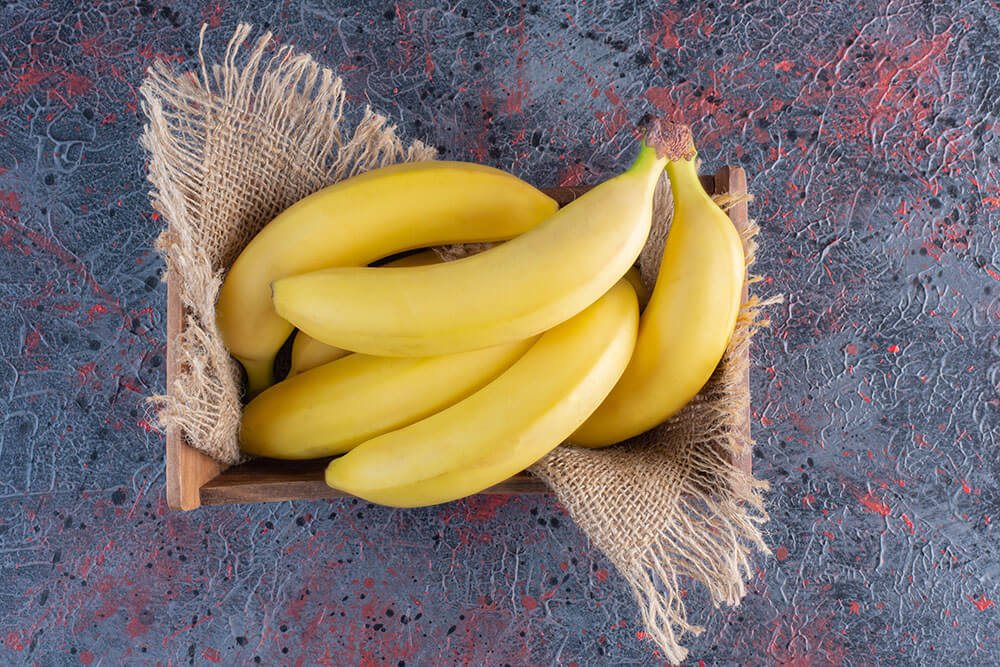
Vietnam is an important banana-growing country in Southeast Asia, with favorable tropical and subtropical growing conditions and a large domestic production base. Vietnamese bananas are supplied to both domestic and international markets in fresh, frozen and processed forms.
For international buyers, Vietnam offers several banana varieties suitable for different applications, including fresh retail, foodservice, processing, frozen products and dried banana products.
This guide explains the main banana varieties available from Vietnam, quality requirements, harvest and packing considerations, and key export markets.
1. Why Source Bananas from Vietnam?
Vietnam offers several advantages for international banana buyers.
Suitable Growing Conditions
Bananas can be cultivated in many regions of Vietnam because of the country’s warm climate, rainfall and diverse agricultural areas.
Major growing areas can be found across northern, central and southern Vietnam.
Multiple Banana Varieties
Vietnamese growers produce different varieties for domestic consumption and export. Depending on the market, buyers can source bananas for:
- Fresh retail
- Supermarkets
- Wholesale markets
- Foodservice
- Processing
- Frozen products
- Dried fruit
- Banana puree and other ingredients
Competitive Agricultural Supply Chain
Vietnam has developed supply chains connecting:
Banana farms → collection centers → packing facilities → exporters → international buyers
This allows exporters to coordinate grading, packing, cold-chain handling and international transportation according to buyer requirements.
2. Main Banana Varieties in Vietnam
Different banana varieties have different characteristics, flavors, sizes and applications.
Cavendish Banana
Cavendish is one of the most internationally recognized commercial banana varieties.
It is particularly suitable for:
- Supermarkets
- Fresh fruit importers
- Wholesale distributors
- Foodservice
- Retail chains
Cavendish bananas are generally harvested at the green stage and transported under controlled conditions so that they can be ripened closer to the destination market.
For export buyers, specifications may include:
- Finger length
- Diameter
- Hands per carton
- Number of fingers per hand
- Maturity
- Color
- Defect tolerance
- Carton weight
Chuối Già Nam Mỹ
Chuối Già Nam Mỹ is a commercial banana type widely cultivated in Vietnam and commonly associated with export-oriented production.
Depending on the farm and supplier, it may be marketed for fresh export and processed applications.
Buyers should confirm the exact variety, grade and growing area with the supplier because commercial naming can vary between Vietnamese suppliers.
Chuối Xiêm / Pisang Awak
Pisang Awak, commonly known in Vietnam as chuối xiêm, is another popular banana type.
It is commonly consumed fresh and can also be used in:
- Cooking
- Desserts
- Banana cakes
- Banana chips
- Frozen products
Its characteristics differ from Cavendish, so it should be evaluated according to the buyer’s intended market.
Chuối Ngự
Chuối Ngự is a traditional Vietnamese banana variety valued for its aroma, sweetness and relatively small fruit size.
It is mainly associated with the domestic market and specialty consumption rather than large-volume commodity exports.
However, specialty fruit buyers may be interested in Vietnamese traditional banana varieties for premium or ethnic-food markets.
3. Fresh Banana Export from Vietnam
Fresh bananas are normally harvested while still green because fully ripe bananas are difficult to transport over long distances.
The export process generally involves:
Harvesting → sorting → washing/cleaning → grading → packing → pre-cooling → cold storage → container loading → international transportation
The exact process depends on the variety, destination and buyer requirements.
Green Harvesting
Export bananas are generally harvested at an appropriate maturity stage rather than waiting until the fruit is fully yellow.
This helps provide sufficient shelf life for:
- Transportation
- Customs clearance
- Ripening
- Distribution
- Retail sales
Harvest maturity is therefore an important part of export quality control.
4. Banana Export Quality Requirements
International buyers normally evaluate bananas according to several quality parameters.
Appearance
Export-quality bananas should generally have:
- Clean skin
- Good shape
- Uniform size
- Appropriate color
- No significant bruising
- No serious cuts or cracks
- No signs of decay
Size and Grade
Buyers may specify:
- Fruit length
- Fruit diameter
- Weight
- Number of fingers
- Number of hands
- Carton weight
The exact specifications depend on the destination market and retail requirements.
Maturity
Maturity is particularly important for fresh banana exports.
If bananas are harvested too early, they may fail to develop appropriate eating quality. If harvested too late, they may have insufficient shelf life for international transportation.
Exporters therefore need to coordinate harvest timing with shipping schedules and the buyer’s ripening program.
5. Banana Packaging for Export
Bananas can be packed according to the buyer’s market and distribution system.
Common packaging formats include:
- Corrugated cartons
- Ventilated banana cartons
- Plastic liners
- Palletized cartons
- Retail-ready packaging
- Buyer-branded cartons
A typical export carton may contain a specified net weight according to the buyer’s requirements.
For supermarket programs, buyers may also request:
- Private-label packaging
- Barcodes
- Country-of-origin information
- Retail labels
- Specific carton dimensions
- Organic labeling where applicable
Packaging should be designed to protect the fruit from compression, impact and excessive moisture during transportation.
6. Cold Chain and Banana Transportation
Fresh bananas are sensitive to temperature and handling.
For long-distance export, temperature management is essential.
The exporter needs to coordinate:
- Harvest timing
- Packing
- Pre-cooling
- Cold storage
- Container loading
- Reefer settings
- Transit time
- Destination handling
Bananas are generally transported as green fruit and later ripened using controlled conditions.
The appropriate temperature depends on the variety, maturity and shipping program. Buyers should therefore agree on the precise cold-chain specifications with the exporter and logistics provider before loading.
7. Frozen Banana Products from Vietnam
Vietnam can also supply bananas in processed and frozen forms.
Frozen bananas can be useful for buyers who need longer storage and more flexible transportation than fresh fruit.
Potential products include:
- Frozen whole banana
- Frozen banana slices
- Frozen banana chunks
- Frozen banana pieces
- Frozen banana puree
These products can be used in:
- Smoothies
- Desserts
- Ice cream
- Bakery products
- Food manufacturing
- Beverage production
Frozen products are normally shipped in temperature-controlled reefer containers.
8. Dried Banana and Processed Banana Products
Vietnam’s banana industry also provides opportunities beyond fresh fruit.
Depending on the supplier, buyers may source:
- Dried banana
- Banana chips
- Crispy banana
- Banana puree
- Banana powder
- Banana flour
- Banana-based snacks
These products can provide longer shelf life and may be suitable for retail, food manufacturing and ingredient applications.
For processed products, buyers should confirm:
- Ingredients
- Moisture content
- Processing method
- Shelf life
- Packaging
- Food-safety standards
- Additives
- Certifications
9. Banana Harvest Seasons in Vietnam
Bananas can be cultivated and harvested during much of the year in Vietnam.
However, production volumes and quality can vary according to:
- Region
- Variety
- Weather
- Farm management
- Planting schedule
- Irrigation
- Seasonal conditions
For commercial export programs, buyers should ask suppliers for a monthly supply calendar rather than relying only on a general harvest season.
This is especially important when planning regular container shipments.
10. Major Banana-Growing Areas in Vietnam
Bananas are cultivated in many parts of Vietnam.
Important production areas include regions in:
Northern Vietnam
Northern provinces have areas suitable for banana cultivation, particularly along agricultural zones with favorable soil and water conditions.
Central Vietnam
Central Vietnam also has commercial banana-growing areas and can contribute to export supply.
Southern Vietnam
The southern region, including parts of the Mekong Delta and southeastern Vietnam, has favorable conditions for tropical fruit production.
The exact sourcing area should be selected according to the required variety, production volume, quality standard and export destination.
11. Vietnam Banana Export Markets
Vietnamese bananas can serve several international markets.
China
China is an important destination for Vietnamese agricultural products and has significant demand for tropical fruits.
For banana exports, exporters must comply with applicable Chinese import, plant-health, food-safety and traceability requirements.
South Korea
South Korea is an attractive market for tropical fruit.
Importers and distributors may focus on:
- Fruit appearance
- Size
- Quality consistency
- Packaging
- Food safety
- Cold-chain management
Japan
Japan is a demanding market where buyers generally place strong emphasis on:
- Quality
- Appearance
- Food safety
- Traceability
- Packaging
- Consistency
Vietnamese exporters targeting Japan need to ensure that the product and production system meet the buyer’s requirements.
Middle East
Markets such as:
- United Arab Emirates
- Saudi Arabia
- Qatar
- Kuwait
- Oman
can provide opportunities for tropical fruit exporters.
These markets may serve both retail and foodservice channels.
Other Markets
Vietnamese bananas may also be suitable for buyers in:
- Singapore
- Malaysia
- Thailand
- Hong Kong
- Taiwan
- Australia
- New Zealand
- Europe
- North America
Actual market access depends on the destination country’s regulations and the specific product.
12. Fresh vs. Frozen vs. Processed Banana
| Product | Main Advantage | Typical Buyers |
|---|---|---|
| Fresh banana | Retail and foodservice | Importers, distributors, supermarkets |
| Frozen banana | Longer storage and convenient processing | Food manufacturers, restaurants |
| Banana slices | Ready-to-use ingredient | Bakeries, beverage companies |
| Banana chips | Retail snack | Distributors, retailers |
| Dried banana | Long shelf life | Snack importers, retailers |
| Banana puree | Food and beverage ingredient | Food manufacturers |
| Banana powder | Ingredient application | Food manufacturers |
13. What International Banana Buyers Should Ask Suppliers
Before purchasing Vietnamese bananas, buyers should request detailed information about:
- Banana variety
- Growing area
- Farm size
- Monthly production capacity
- Harvest schedule
- Fruit size
- Fruit grade
- Maturity stage
- Carton weight
- Packaging
- Shelf life
- Cold-chain requirements
- Available certifications
- Food-safety standards
- Phytosanitary requirements
- Previous export markets
- MOQ
- Loading port
- Incoterm
- Lead time
- Payment terms
- Sample availability
For large-volume orders, buyers should also consider an independent pre-shipment inspection and quality-control procedure.
14. How Vietnamese Banana Export Orders Work
A typical commercial banana export transaction may follow these steps:
Step 1 – Buyer Sends Requirements
The buyer provides:
- Variety
- Quantity
- Packaging
- Destination
- Required grade
- Target delivery date
Step 2 – Supplier Selection
The exporter identifies suitable farms, packing houses or processing facilities.
Step 3 – Quotation
The exporter provides pricing based on the requested specification and Incoterm, such as:
- EXW
- FOB
- CFR
- CIF
Step 4 – Sample and Quality Confirmation
Where required, samples, photos, specifications and documentation are reviewed before the commercial order.
Step 5 – Production and Harvest
The supplier prepares the required quantity according to the agreed harvest and packing schedule.
Step 6 – Quality Control
The fruit is inspected, graded and packed before shipment.
Step 7 – Export Documentation
Depending on the market, documentation may include commercial documents, packing lists, certificates of origin, phytosanitary certificates and other documents required by the importing country.
Step 8 – Container Shipment
Fresh bananas are shipped under an appropriate temperature-controlled logistics program.
15. Why Source Bananas from Vietnam?
Vietnam can be an attractive sourcing destination for buyers looking for alternatives to traditional banana-sourcing countries.
Key advantages include:
- Tropical growing conditions
- Multiple banana varieties
- Growing export-oriented production
- Fresh and processed product options
- Competitive agricultural supply
- Geographic proximity to major Asian markets
- Ability to develop customized packaging
- Access to both fresh and processed fruit supply
For buyers seeking long-term supply, working directly with an experienced Vietnamese exporter can also simplify communication between the international buyer, farm, packing facility and logistics providers.
16. Vietnam Banana Export with ELOVA
ELOVA is a Vietnam-based fruit exporter supplying Vietnamese fresh, frozen and processed fruits and agricultural products to international buyers.
For banana buyers, we can research suitable Vietnamese supply according to your:
- Banana variety
- Required quantity
- Quality grade
- Packaging
- Destination country
- Delivery schedule
- Target specification
Available product options may include:
- Fresh Cavendish banana
- Vietnamese commercial banana varieties
- Frozen banana
- Banana slices
- Banana chips
- Dried banana
- Banana puree
- Banana powder
Our goal is to connect international buyers with suitable Vietnamese supply and coordinate the export process from Vietnam to the destination market.
If you are looking for Vietnamese bananas, send us your required variety, quantity, packaging, destination and specifications. ELOVA can review suitable supply options and provide an export quotation.
Frequently Asked Questions
What banana varieties are available from Vietnam?
Vietnam produces several banana varieties, including Cavendish, Pisang Awak (chuối xiêm), Chuối Ngự and other commercial and local varieties.
Can Vietnam export fresh bananas?
Yes. Vietnamese fresh bananas can be prepared for export, subject to the import regulations, plant-health requirements and quality standards of the destination country.
Can I import frozen bananas from Vietnam?
Yes. Vietnamese suppliers can provide frozen banana products such as slices, chunks and puree for food manufacturing and foodservice applications.
What is the best banana for export?
Cavendish is one of the most widely traded international banana varieties. However, the best variety depends on the buyer’s target market, application, shipping distance and customer preferences.
How are Vietnamese bananas shipped internationally?
Fresh bananas are generally harvested at an appropriate green maturity stage and transported using a controlled cold chain. Frozen banana products require frozen-temperature transportation.
What information should I provide when requesting a banana quotation?
Provide the banana variety, quantity, size/grade, packaging, destination port, preferred Incoterm and delivery schedule. The more specific the requirements, the more accurately an exporter can prepare a quotation.
Conclusion
Vietnam offers international buyers a growing range of banana sourcing opportunities, from fresh Cavendish and other commercial varieties to frozen, dried and processed banana products.
With suitable growing conditions, multiple production regions and an expanding agricultural export industry, Vietnam can be considered as an additional sourcing origin for importers, distributors, supermarkets, foodservice companies and food manufacturers.
For buyers looking for reliable Vietnamese banana supply, product specifications, quality control, packaging and cold-chain logistics should be evaluated together to ensure a successful export program.
Contact ELOVA
ELOVA – Vietnam Fruit Exporter
- Contact: Jason Cao
- Email: jason.cao@elova.com.vn
- WhatsApp: +84 867 569 168
- Website: https://elovaglobal.com/
For fresh bananas, frozen bananas or other Vietnamese fruit products, contact ELOVA with your product requirements, quantity, packaging and destination market.
We will review suitable supply options in Vietnam and provide an export quotation for your consideration.
