

Blog
Vietnam Dragon Fruit: Varieties, Season, Packaging and Export

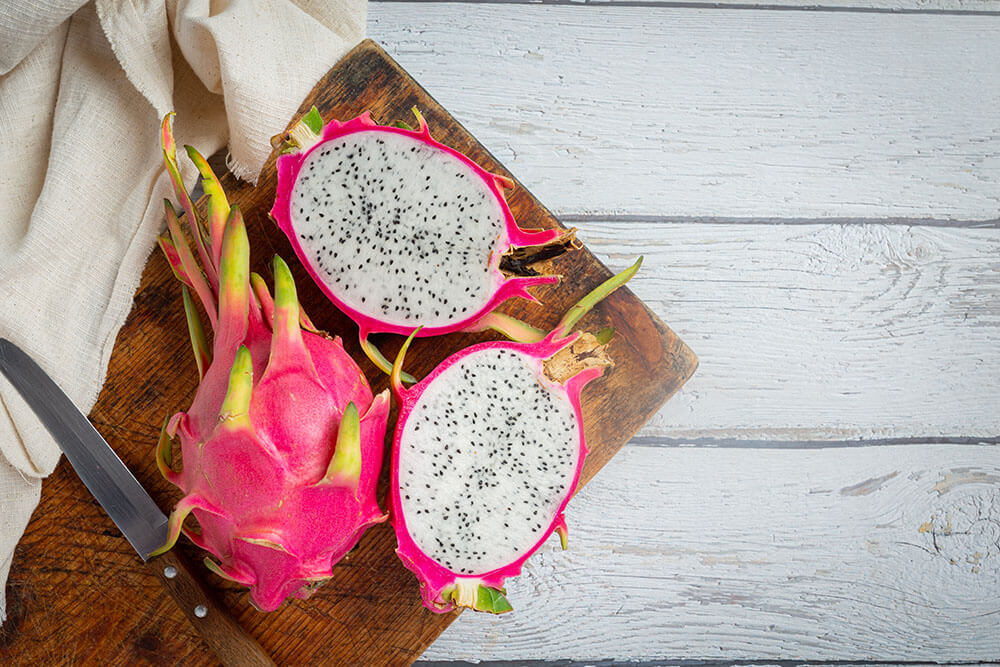
Vietnam is one of the world’s well-known producers and exporters of dragon fruit. With established growing areas, experienced growers, packing facilities, and international export experience, Vietnam offers dragon fruit in both white-flesh and red-flesh varieties for overseas markets.
For international fruit importers, wholesalers, distributors, supermarkets, and food processors, Vietnamese dragon fruit can be supplied as fresh whole fruit as well as frozen and processed products.
This guide covers the main dragon fruit varieties in Vietnam, growing regions, harvest seasons, quality specifications, packaging, storage, transportation, and how international buyers can source dragon fruit from Vietnam.
1. Why Source Dragon Fruit from Vietnam?
Vietnam has developed a large agricultural supply chain for dragon fruit, particularly in southern growing regions.
Several factors make Vietnamese dragon fruit attractive to international buyers:
- Established commercial production
- Multiple growing regions
- Red-flesh and white-flesh varieties
- Different fruit sizes and grades
- Multiple production periods
- Experience with export packaging
- Established cold-chain and logistics services
- Availability for fresh and processed applications
Vietnamese dragon fruit is supplied to a variety of international markets, subject to the import requirements and market access conditions of each destination.
2. Main Dragon Fruit Varieties in Vietnam
Vietnam primarily produces two commercially important types of dragon fruit.
Red-Flesh Dragon Fruit
Red-flesh dragon fruit has become increasingly popular because of its vibrant flesh color and sweet flavor.
The flesh ranges from pink to deep red depending on the variety and maturity.
Typical characteristics:
- Red or pink flesh
- Small black edible seeds
- Sweet tropical flavor
- Attractive appearance
- Suitable for fresh consumption
- Can also be processed
Red-flesh dragon fruit is suitable for fresh retail markets as well as juice, puree, frozen fruit, and other food applications.
White-Flesh Dragon Fruit
White-flesh dragon fruit is another major Vietnamese commercial variety.
It typically has white flesh with small black seeds and a mild, refreshing flavor.
Typical characteristics:
- White flesh
- Small black edible seeds
- Mild and refreshing flavor
- Suitable for fresh consumption
- Available in different commercial sizes
White-flesh dragon fruit remains an important product for international fruit markets.
3. Major Dragon Fruit Growing Areas in Vietnam
Dragon fruit is cultivated in several parts of Vietnam, particularly in southern provinces.
Binh Thuan
Binh Thuan is one of Vietnam’s most important dragon fruit production areas and is particularly well known for commercial-scale cultivation.
The province has developed extensive experience in dragon fruit farming, harvesting, sorting, packing, and transportation.
Long An
Long An is another important dragon fruit growing area in southern Vietnam.
Its location within the southern agricultural region provides access to major transportation routes and commercial markets.
Tien Giang
Tien Giang also has significant dragon fruit production and contributes to Vietnam’s overall supply.
Other growing areas may also produce dragon fruit depending on variety, farming conditions, and production cycles.
For buyers, the most suitable supplier should be selected based on the required variety, harvest period, volume, quality specifications, and destination market.
4. Vietnam Dragon Fruit Season
Dragon fruit has a relatively long production calendar compared with some highly seasonal tropical fruits.
Vietnamese dragon fruit can be available during multiple periods of the year, depending on the growing region, variety, weather, and farming practices.
In addition to the main natural production season, growers may use agricultural techniques to influence flowering and production timing.
This can provide greater flexibility for commercial buyers.
However, international buyers should not assume that every variety is available in the same quantity throughout the year.
Before placing an order, buyers should confirm:
- Current availability
- Variety
- Growing province
- Fruit size
- Grade
- Expected harvest date
- Available volume
- Packaging
- Destination requirements
5. Dragon Fruit Harvest and Post-Harvest Handling
Harvest timing is important because dragon fruit continues to change in quality after harvesting.
Fruit should be harvested at an appropriate maturity stage according to the intended transportation method and destination.
A typical export process may include:
Harvest → Collection → Sorting → Cleaning → Grading → Quality Inspection → Packing → Pre-Cooling → Cold Storage → Reefer Loading → Export
The exact process can vary depending on the supplier and buyer requirements.
For long-distance export, careful handling is essential to minimize:
- Bruising
- Skin damage
- Stem damage
- Microbial deterioration
- Dehydration
- Premature spoilage
6. Dragon Fruit Export Quality Specifications
International buyers normally purchase dragon fruit according to detailed specifications rather than simply requesting “dragon fruit.”
Typical specifications may include:
Fruit variety
- Red flesh
- White flesh
Fruit size
Buyers may specify individual fruit weight, size range, or number of fruits per carton.
For example:
- 300–400 g
- 400–500 g
- 500–600 g
- 600 g+
Actual commercial grades and available sizes vary by supplier and season.
Appearance
Export-grade fruit may be evaluated for:
- Shape
- Skin color
- Freshness
- Scale appearance
- Bruising
- Cuts
- Scars
- Insect damage
- Rot
- Mold
- Other visible defects
Internal quality
Depending on the buyer, specifications may include:
- Flesh color
- Taste
- Firmness
- Maturity
- Brix or soluble-solids requirements
The exact specifications should always be agreed upon before production and shipment.
7. Dragon Fruit Packaging for Export
Packaging must protect the fruit during handling, transportation, loading, unloading, and distribution.
Common export packaging options include:
Corrugated cartons
Cartons are commonly used for commercial export shipments.
Depending on the market, cartons can be customized with:
- Product name
- Net weight
- Gross weight
- Country of origin
- Variety
- Exporter information
- Buyer or brand information
- Handling instructions
Individual fruit protection
Depending on the market and quality requirements, individual fruits may be protected using:
- Foam nets
- Sleeves
- Paper protection
- Other cushioning materials
Plastic crates
Plastic crates may be used during internal transportation and handling before export.
The final export packaging should be selected based on the destination market, transportation method, fruit size, and buyer requirements.
8. Typical Dragon Fruit Export Packing
There is no single universal packing specification for all markets.
Buyers can request different carton sizes and fruit counts depending on their distribution requirements.
For example, a buyer may request:
5 kg/carton
or
10 kg/carton
with a specified fruit count or weight range.
For retail programs, buyers may also require smaller consumer packages.
Before quotation, the buyer should provide:
- Net weight per carton
- Fruit size
- Number of fruits per carton
- Carton dimensions
- Pallet requirement
- Labeling requirements
This allows the exporter to calculate loading quantities and shipping costs more accurately.
9. Dragon Fruit Storage
Fresh dragon fruit should be handled under appropriate temperature and humidity conditions to preserve quality.
Storage requirements depend on:
- Variety
- Maturity
- Harvest condition
- Intended storage duration
- Transportation method
Cold storage can help slow deterioration and maintain fruit quality, but the temperature should be selected carefully to avoid cold-related quality problems.
The exporter and buyer should agree on the appropriate storage and transportation conditions for the specific shipment.
10. Shipping Dragon Fruit from Vietnam
Vietnamese dragon fruit can be transported by air or sea.
Air Freight
Air freight may be appropriate for:
- Small or trial shipments
- Premium products
- Short delivery windows
- Highly time-sensitive orders
The main disadvantage is the higher transportation cost.
Sea Freight
Sea freight is generally more economical for larger commercial volumes.
For long-distance shipments, refrigerated containers may be used to maintain appropriate conditions during transportation.
Before booking a shipment, buyers should consider:
- Origin location
- Loading date
- Destination port
- Transit time
- Container type
- Required temperature
- Expected shelf life
- Import regulations
11. Dragon Fruit Export to International Markets
The suitability of Vietnamese dragon fruit depends on the import regulations and market-access requirements of the destination country.
Different markets may have requirements concerning:
- Plant health
- Pest control
- Pesticide residues
- Food safety
- Traceability
- Treatment procedures
- Packaging
- Labeling
- Approved production or packing facilities
Therefore, an exporter should confirm the applicable requirements for the specific destination before shipment.
12. Fresh vs Frozen Dragon Fruit
Vietnam can supply dragon fruit in different formats.
| Product Format | Main Application |
|---|---|
| Fresh whole dragon fruit | Retail, supermarkets, wholesalers |
| Fresh red-flesh dragon fruit | Retail and premium fruit markets |
| Fresh white-flesh dragon fruit | Retail and foodservice |
| Frozen dragon fruit | Food manufacturers and distributors |
| Dragon fruit puree | Beverage and food manufacturers |
| Dried dragon fruit | Snack brands and retailers |
Fresh dragon fruit is generally most suitable when the buyer wants to sell whole fruit through retail or wholesale channels.
Frozen or processed dragon fruit can be more suitable when the buyer prioritizes longer storage and manufacturing applications.
13. How Much Dragon Fruit Can Fit in a Container?
Container loading capacity depends on:
- Carton weight
- Carton dimensions
- Fruit size
- Pallet configuration
- Container type
- Loading method
- Destination requirements
Therefore, there is no single loading quantity applicable to every shipment.
For an accurate quotation, buyers should specify their preferred packing format and destination.
The exporter can then calculate the expected number of cartons and approximate net weight per container.
14. What Should Buyers Ask a Vietnamese Dragon Fruit Exporter?
Before purchasing, international buyers should request detailed information about:
- Dragon fruit variety
- Growing province
- Fruit size
- Grade
- Harvest period
- Current availability
- Packaging
- Net weight per carton
- Number of fruits per carton
- Product photos
- Quality specifications
- Shelf life
- Storage conditions
- Available certifications
- Phytosanitary documentation
- MOQ
- FOB price
- CIF price, if required
- Loading quantity
- Estimated shipment schedule
Clear specifications help avoid misunderstandings between the buyer and exporter.
15. How to Buy Dragon Fruit from Vietnam
A typical international purchasing process can follow these steps.
Step 1: Send your requirements
The buyer provides:
- Variety
- Quantity
- Size
- Grade
- Packaging
- Destination
- Delivery period
- Preferred Incoterm
Step 2: Receive product options
The exporter reviews the requirements and identifies suitable Vietnamese supply.
Step 3: Confirm specifications
The buyer and exporter agree on:
- Product quality
- Size
- Packaging
- Quantity
- Price
- Shipment schedule
Step 4: Sample or trial order
For a new supplier relationship, a sample or trial shipment can help the buyer evaluate product quality and packaging performance.
Step 5: Commercial shipment
After the specifications are approved, the exporter coordinates harvesting, packing, inspection, documentation, and transportation.
16. Why Source Vietnamese Dragon Fruit with ELOVA?
ELOVA is a Vietnam-based fruit exporter supplying fresh, frozen, and dried Vietnamese fruits to international buyers.
For dragon fruit, ELOVA can coordinate suitable Vietnamese supply according to the buyer’s requirements, including:
- Red-flesh dragon fruit
- White-flesh dragon fruit
- Different fruit sizes
- Export-grade specifications
- Customized packaging
- Bulk quantities
- Trial shipments
- Container shipments
We can also coordinate product specifications, supplier communication, quality inspection, export documentation, and international shipping arrangements.
Our goal is to provide international buyers with a practical sourcing channel for Vietnamese fruit products.
17. Request a Dragon Fruit Export Quotation
Looking for Vietnamese dragon fruit for your market?
Send ELOVA your requirements, including:
- Variety: Red-flesh or white-flesh
- Quantity: kg, cartons, or containers
- Fruit size: required weight range
- Packaging: cartons or customized packaging
- Destination: country and port
- Delivery period: preferred shipping window
- Incoterm: FOB, CIF, or other terms
ELOVA can review your requirements and provide suitable Vietnamese dragon fruit options and an export quotation.
ELOVA – Vietnamese Dragon Fruit Exporter
Fresh Dragon Fruit | Frozen Dragon Fruit | Dried Fruit
Email: jason.cao@elova.com.vn
WhatsApp: +84 867 569 168
Website: export.elova.com.vn
Looking for dragon fruit from Vietnam? Contact ELOVA for product specifications, availability and export quotation.
